
Government conferences require a careful balance between professionalism, organization, accessibility, and engagement. Attendees expect useful information and efficient communication, but that does not mean the event environment needs to feel plain or uninspiring.
With thoughtful government conference planning in Washington DC, agencies and organizations can create professional experiences that encourage participation while meeting the practical requirements of public-sector events.
From venue selection and registration to event design and technical production, every detail contributes to the overall conference experience.
1. Start With Clear Conference Objectives
Before planning the physical event, establish what the conference needs to accomplish.
Is the goal to educate attendees, share policy information, facilitate collaboration, recognize achievements, or connect government leaders with stakeholders?
Clear objectives help determine the appropriate venue, room layout, technology, event design, and schedule. They also make it easier to measure whether the conference delivered the intended results.
2. Choose the Right Washington DC Venue
The venue can have a major impact on the attendee experience.
Consider the expected number of guests, accessibility, transportation, parking, security requirements, room capacities, breakout spaces, catering, and available setup time.
Washington DC offers a wide range of conference venues, hotels, government facilities, and distinctive event spaces. The best venue should support both the practical requirements of the conference and the experience you want attendees to have.
3. Make Registration Simple
First impressions matter. A complicated registration process can immediately create frustration for attendees.
Create a clearly identified registration area with organized check-in stations, directional signage, name badges, and staff who can assist guests.
For larger government conferences, consider separate registration points for different attendee groups when appropriate. Clear organization can reduce lines and help attendees move into the conference efficiently.
4. Use Professional Event Design
Government events often require a formal atmosphere, but professional design can still make the environment engaging.
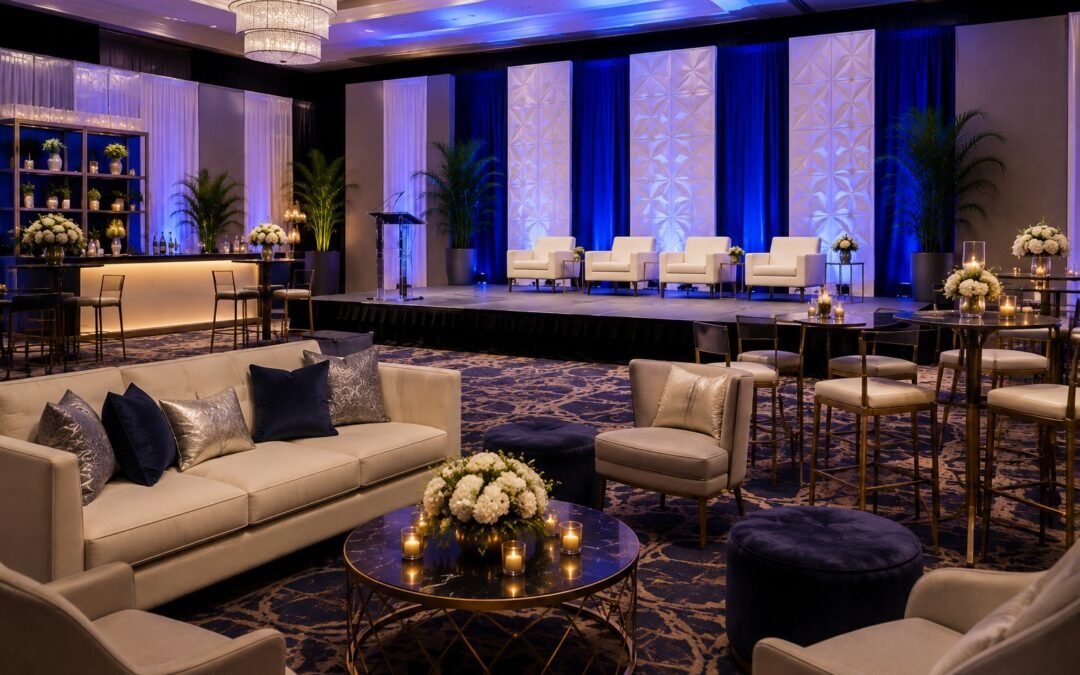
Branded stage backdrops, dimensional lettering, custom signage, architectural elements, registration displays, and carefully selected furniture can create a polished environment while maintaining the appropriate tone.
Custom scenic fabrication can also transform a standard conference room into a purpose-built environment designed around the agency, program, or conference theme.
5. Create an Effective Stage Environment
The stage is one of the most important visual areas of a government conference.
Speakers need to be clearly visible, presentations need to be easy to follow, and the stage should provide an appropriate setting for government officials, panel discussions, presentations, and ceremonies.
A professional stage design can combine scenic backdrops, podiums, lighting, screens, branded elements, and other production components to create a cohesive presentation environment.
6. Invest in Reliable Technical Production
Technology plays a central role in modern conferences.
Audio systems, microphones, presentation screens, lighting, video, livestreaming, and presentation playback all need to function reliably.
Technical rehearsals are especially valuable. Testing equipment before attendees arrive allows the production team to identify potential problems and ensure speakers understand how the system will operate.
For hybrid conferences, technical planning becomes even more important because remote participants need to hear, see, and interact with the program effectively.
7. Improve Wayfinding and Accessibility
Attendees should be able to navigate the conference without constantly asking for directions.
Use clear signs to identify registration, session rooms, restrooms, dining areas, networking spaces, and exits.
Accessibility should also be considered throughout the event. Seating arrangements, pathways, signage, presentation visibility, and other environmental details should support a comfortable experience for all attendees.
8. Design Spaces for Interaction
Government conferences don’t have to consist entirely of presentations.
When appropriate, create spaces where attendees can network, exchange ideas, and continue conversations between sessions.
Lounge seating, cocktail tables, refreshment areas, and strategically arranged furniture can create informal interaction points without compromising the professional character of the event.
For conferences with breakout sessions, thoughtful room layouts can also encourage collaboration and participation.
9. Coordinate Logistics Carefully
Government conferences can involve multiple vendors, speakers, production teams, venue personnel, and stakeholders.
Deliveries, installation, security procedures, speaker schedules, catering, technical rehearsals, room transitions, and teardown should all be coordinated in advance.
Working with an experienced event production partner can help bring these moving parts together and reduce the risk of last-minute problems.
10. Focus on the Attendee Experience
Ultimately, an engaging government conference is one where attendees can focus on the content, connect with other participants, and move through the event comfortably.
Consider everything from seating and acoustics to lighting, food service, signage, technology, and session transitions.
Small details can have a significant impact on how organized and professional the conference feels.
Partner With an Experienced Event Production Team
Creating a successful government conference requires more than scheduling speakers and reserving a room. The physical environment, technical production, branding, logistics, and attendee experience all need to work together.
Uniquely DC provides event production, custom fabrication, and specialty rentals for government and corporate events in Washington DC, Maryland, and Northern Virginia. From custom scenic environments and professional staging to event rentals and on-site production support, an experienced team can help turn a government conference plan into a polished and engaging event.
With the right planning and production strategy, your next Washington DC government conference can be professional, accessible, memorable, and designed around the people attending it.