
Planning a corporate conference in Washington DC requires more than choosing a venue and sending invitations. A successful conference combines strategic planning, professional event production, engaging design, reliable technology, and smooth logistics.
Washington DC offers an ideal setting for corporate conferences, with convenient access for national organizations, government agencies, associations, nonprofits, and businesses. However, the city’s busy venues, security requirements, transportation considerations, and high expectations make professional planning especially important.
Here is a practical guide to planning a successful corporate conference in Washington DC.
1. Define Your Conference Goals
Start by establishing what you want the conference to accomplish. Your goals will influence almost every decision that follows.
A corporate conference may be designed to educate employees, introduce new products, bring industry leaders together, generate business opportunities, or strengthen relationships with clients and partners.
Define your target audience, expected attendance, key messages, and desired outcomes before moving into venue selection and event design.
2. Choose the Right Washington DC Venue
The venue sets the foundation for your conference. Consider the expected number of attendees, room layouts, accessibility, parking, transportation, catering, technical capabilities, and available setup time.
Washington DC has everything from large convention facilities and hotels to historic buildings and unique event spaces. The right choice depends on your conference objectives and overall experience.
Don’t evaluate a venue based only on its appearance. Make sure it can accommodate registration, presentations, networking, meals, breakout sessions, staging, and production requirements.
3. Build a Detailed Conference Timeline
A corporate conference involves many moving parts, so creating a detailed timeline is essential.
Begin planning well in advance and establish deadlines for:
-
- Venue selection
- Speaker confirmations
- Registration
- Catering
- Event design
- AV and technical production
- Signage and branding
- Furniture and rentals
- Custom fabrication
- Vendor coordination
- Rehearsals
- Event-day setup
A centralized production schedule helps everyone understand responsibilities and reduces last-minute issues.
4. Create a Professional Event Design
Conference design should support your organization’s brand while creating an environment that feels engaging and professional.
Consider branded registration areas, directional signage, stage backdrops, sponsor displays, networking lounges, custom scenic elements, and branded presentation areas.
Custom event fabrication can be particularly effective when you want your conference to stand out. Dimensional logos, custom backdrops, architectural elements, and branded installations can transform a standard venue into an environment designed specifically for your organization.
5. Plan Audio-Visual and Technical Production
Technology is one of the most important components of a modern conference.
Presentations, videos, microphones, lighting, projection, LED displays, livestreaming, and other technical elements must work reliably throughout the event.
Your production team should understand the conference schedule and coordinate closely with speakers, presenters, venue staff, and technical vendors.
Conducting a technical rehearsal before the event can help identify problems with presentations, audio, lighting, video, and stage transitions before attendees arrive.
6. Make Registration and Wayfinding Easy
The attendee experience begins as soon as guests arrive.
A well-designed registration area should make check-in simple and efficient. Clear signage should help attendees find meeting rooms, restrooms, breakout sessions, dining areas, and networking spaces.
For larger conferences, color-coded signs, digital displays, directional graphics, and strategically positioned staff can make navigating the venue much easier.
Good wayfinding reduces confusion and helps the conference feel organized from the beginning.
7. Design Spaces for Networking
Networking is often one of the most valuable parts of a corporate conference.
Don’t dedicate every area to formal presentations. Create comfortable spaces where attendees can have conversations between sessions.
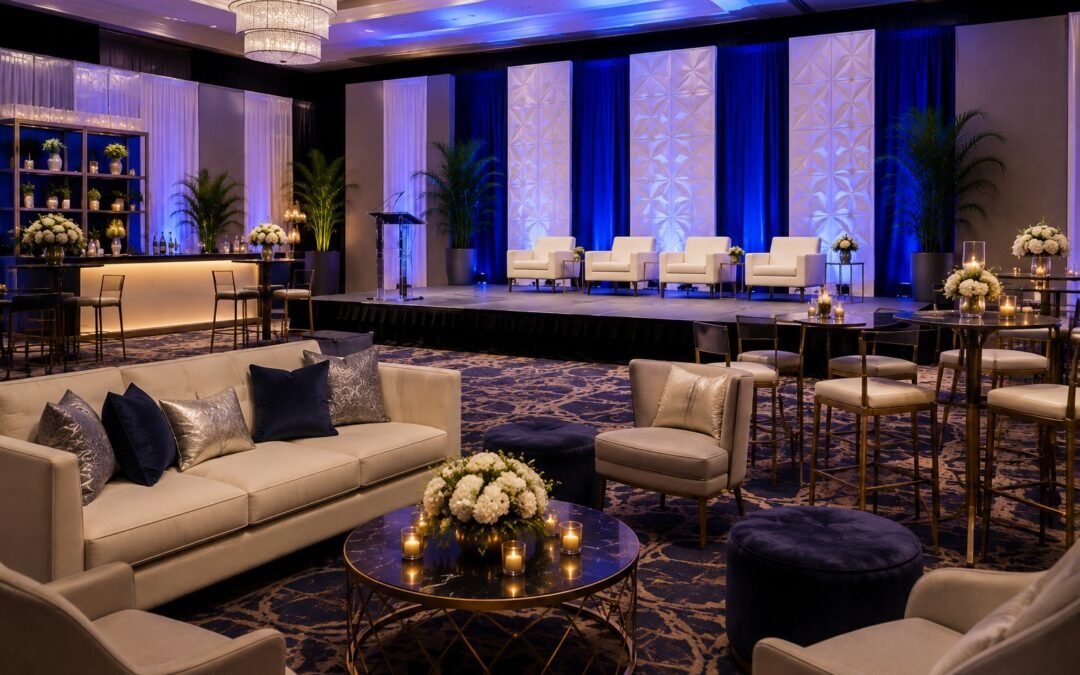
Lounge furniture, cocktail tables, specialty bars, branded seating areas, and thoughtfully designed networking zones can encourage interaction while maintaining a professional atmosphere.
The layout should also allow attendees to move easily between presentations, meals, exhibits, and networking areas.
8. Coordinate Vendors and Logistics
A successful conference depends on strong coordination between multiple teams.
Caterers, AV technicians, decorators, rental companies, fabricators, venue staff, speakers, transportation providers, and event personnel all need to understand the schedule.
A professional event production company can coordinate these moving parts and manage setup, installation, event operations, and teardown.
This is especially valuable in Washington DC, where venue access, delivery schedules, parking, security, and event timing may require additional planning.
9. Prioritize the Attendee Experience
Every decision should ultimately support the people attending the conference.
Consider comfort, accessibility, seating, acoustics, lighting, temperature, food service, technology, session flow, and opportunities to connect with other attendees.
Even small details can influence how professional and enjoyable the conference feels.
A well-produced event allows attendees to focus on the content and connections rather than logistical problems.
10. Work With an Experienced Event Production Partner
Corporate conferences require creative thinking and precise execution. Working with an experienced event production company in Washington DC can simplify the process by bringing design, fabrication, rentals, technical production, installation, and logistics together.
Uniquely DC provides full-service event production and custom fabrication for corporate and government events throughout the Washington DC, Maryland, and Northern Virginia region. From branded environments and custom scenic elements to specialty rentals and event-day production, an experienced production team can help turn your conference concept into a polished experience.
Plan Your Next Washington DC Conference
A successful corporate conference starts with clear objectives and continues through careful venue selection, event design, technical production, logistics, and attendee experience.
When every element is planned as part of one coordinated vision, your conference can deliver more than presentations—it can create meaningful connections, strengthen your brand, and leave attendees with a memorable experience.